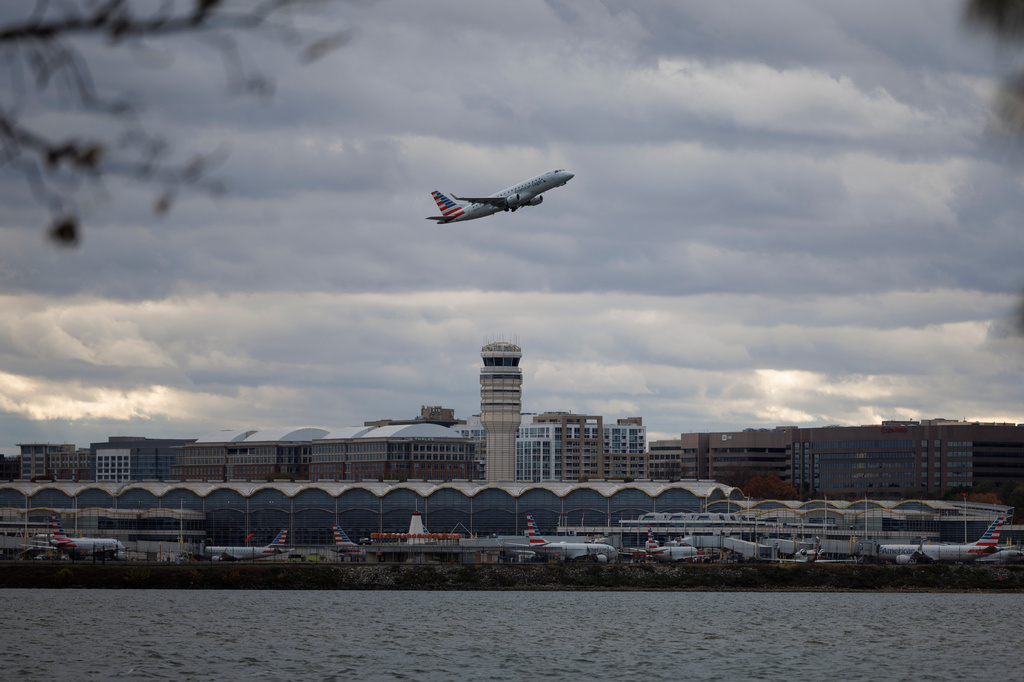
El Dorado, AR – Jonesboro Right Now – A computer networking device at a Federal Aviation Administration facility in southern Arkansas is at the center of a federal investigation into Friday’s nationwide aviation shutdown, which grounded thousands of flights and disrupted travel across the United States.
Investigators are focusing on a newly installed communications router at an FAA facility in El Dorado, Arkansas, where a telecommunications upgrade apparently triggered a massive surge in network traffic, destabilizing critical systems used by air traffic controllers.
The incident on Friday, November 13, resulted in a nationwide ground stop lasting nearly five hours, with widespread delays and cancellations continuing well beyond the shutdown itself.
According to the FAA, 17 of the agency’s 22 regional air traffic control centers experienced network instability during the disruption.
The ground stop began around 3:30 p.m. Eastern and was lifted at 8:15 p.m.
The FAA reported approximately 12,462 flight cancellations Friday, although officials cautioned that not all of those cancellations were necessarily caused by the ground stop.
Memphis and Little Rock Airports Among Those Affected
The nationwide shutdown also disrupted air travel at two airports commonly used by Northeast Arkansas residents: Frederick W. Smith Airport (Memphis) and Bill and Hillary Clinton National Airport (Little Rock).
At Memphis, all departing flights were temporarily halted. The Memphis Commercial Appeal reported that airport flight information screens showed seven cancellations and numerous delays by approximately 5 p.m. Friday. Travelers described being stranded and scrambling to make alternate arrangements.
The disruption also affected FedEx flight operations at its major Memphis hub. According to WMC Action News 5, the company announced it was prepared to implement contingency plans to minimize shipping disruptions.
In Little Rock, an airport spokesperson confirmed to KARK that 19 departing flights had been delayed Friday because of the FAA order.
The problems continued into Saturday. Little Rock television reports indicated that nearly half the flights displayed on Clinton National Airport’s arrival and departure boards were delayed or canceled during the weekend disruption.
Some passengers reported spending hours at the airport before learning their flights had been canceled. Others returned Saturday only to encounter additional delays or cancellations.
The widespread problems at Memphis and Little Rock make it highly likely that some Northeast Arkansas residents were affected, although Jonesboro Right Now has not independently confirmed specific local travelers who experienced disruptions.
Airlines continued working Sunday to restore normal schedules. Delta Air Lines announced it was extending flexible rebooking options through Monday, November 16, for customers affected by the nationwide shutdown.
How Could One Router in Arkansas Disrupt Air Travel Nationwide?
According to reporting by The Wall Street Journal, the trouble began during an effort to modernize the FAA’s communications infrastructure by replacing aging copper telecommunications lines with fiber-optic technology.
The work was being performed by federal contractor L3Harris Technologies.
Investigators believe a newly installed router at the El Dorado facility began generating an extraordinary volume of network traffic, overwhelming other equipment connected to the FAA’s nationwide communications system.
Rebecca Guy, the FAA’s technology chief, said Saturday that investigators identified two locations generating unusually high levels of network activity.
“We saw two places that were actually pinging our network at a very high rate, a thousand connections over every four to five seconds,” Guy said.
That volume of activity apparently destabilized portions of the communications network, interfering with systems that transmit information between pilots and air traffic controllers, as well as critical radar data.
Because the FAA relies on interconnected communications systems to safely manage aircraft movements, a problem originating at one location can potentially affect operations hundreds or even thousands of miles away.
The agency ordered the nationwide ground stop as a safety precaution while technicians worked to identify and correct the problem.
The FAA emphasized that some radio frequencies and radar feeds remained operational throughout the incident, allowing aircraft already in the air to continue receiving instructions and land safely.
Arkansas Wasn’t the Only Location Involved
Although the El Dorado facility has received considerable attention, investigators have also identified a second router at an FAA facility in Amarillo, Texas, that exhibited similar problems.
That discovery raises questions about whether the disruption was caused by defective equipment, an installation error, or a larger vulnerability associated with the FAA’s ongoing network modernization.
Transportation Secretary Sean Duffy addressed the investigation Sunday during an appearance on CBS’s Face the Nation.
Duffy said both routers had been turned over to L3Harris for examination, with FAA personnel participating in the investigation and the FBI offering assistance.
The FAA says technicians were able to stabilize the communications network by disabling the problematic network functions and isolating the Arkansas and Texas locations.
As an additional precaution, similar functionality was disabled on approximately 60 other routers throughout the system.
Both routers involved in the incident have reportedly been sent to an L3Harris laboratory in Florida, where engineers are examining the equipment to determine exactly what went wrong.
Modernization of Aging FAA Systems
The incident comes as the FAA continues a major effort to replace decades-old telecommunications infrastructure with modern fiber-optic connections.
L3Harris, which has worked with the FAA on communications systems for more than two decades, says more than 70% of the planned copper-to-fiber conversion has already been completed.
The company says it is cooperating with federal investigators.
Officials have reported no evidence that the disruption resulted from a cyberattack.
What Investigators Still Don’t Know
Despite reports identifying the El Dorado router as a possible source of the disruption, federal officials have not announced a definitive root cause.
Investigators must still determine whether the failure involved defective hardware, mistakes during installation, or weaknesses in the design of the broader communications network.
The distinction is significant because the equipment in Arkansas may have triggered the disruption without necessarily being the only factor responsible for the nationwide failure.
For now, a telecommunications upgrade at a relatively small FAA facility in southern Arkansas remains at the center of a federal investigation into a disruption that exposed just how interconnected — and potentially vulnerable — the nation’s air traffic communications infrastructure can be.